
Global Liveability Index 2024: UAE cities reinforce reputation for safety and stability
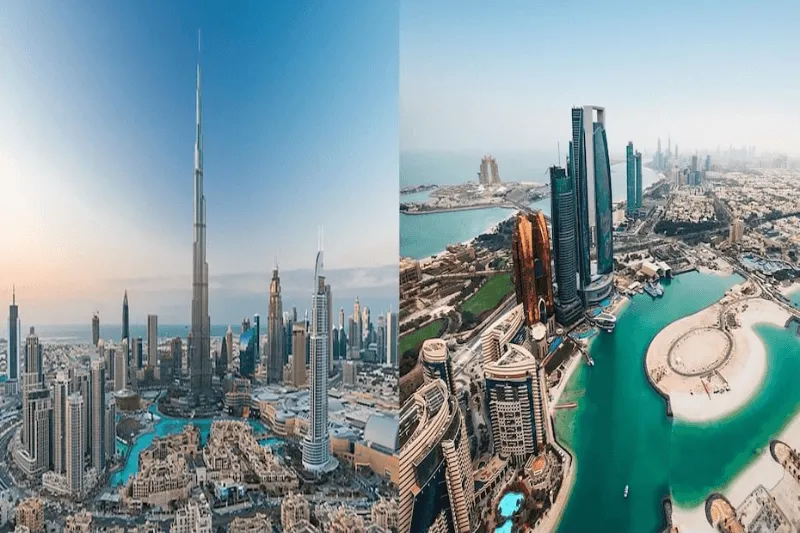


The 2024 Global Liveability Index by the Economist Intelligence Unit (EIU) evaluates 173 cities based on five key categories: stability, healthcare, culture and environment, education and infrastructure. UAE cities have secured top positions on the list.

Dubai and the capital Abu Dhabi have solidified their positions as the most liveable cities in the vast region. Both cities improved their scores in healthcare and education. Abu Dhabi retained the top spot and Dubai came in second, regionally.

The Emirati cities’ strong performances in all of the five key categories underline their commitment to enhancing the quality of life for residents and visitors alike. The annual rankings also highlighted the dominance of Gulf countries in the region.

UAE city ranks as the safest city globally
In terms of the “Crime and Safety Indexes” by Numbeo, the UAE capital shined as the safest city globally, securing 88.2 points on the Safety Index and recording the least score on the Crime Index at 11.8 points. Dubai also ranked highly, securing fifth place on the list.

The education sector in both UAE cities also recorded strong performances. During the 2023-24 academic year, Dubai had 220 private schools and the capital emirate had 459 schools, including private, public and mixed institutions.

In the healthcare sector, Dubai noted impressive results. The number of licenced and operational healthcare facilities in the city reached 5,020 in Q1 2024. The capital, on the other hand, had 3,323 healthcare facilities and 12,922 licenced doctors by the end of 2022.

Stability records most significant drop among 5 categories
Globally, Vienna retained its position as the most liveable city for the third consecutive year, receiving perfect scores in stability, education, healthcare and infrastructure. But cities like Vancouver, Sydney and Melbourne noted declines due to infrastructure issues.

The 2024 Global Liveability Index also pointed out that stability recorded the most significant drop among the five categories. Protests and conflicts have been affecting several cities. For instance, Tel Aviv fell by 20 places as the Israel-Hamas fighting rages on.

Damascus and Tripoli secured the bottom positions on the list, reflecting the ongoing instability in those countries. Overall, the 2024 index highlights the continued improvement of cities in the Gulf region, as Dubai and Abu Dhabi enhance the quality of life for all.

Global Liveability Index 2024: Top 10 cities
1. Vienna

2. Copenhagen

3. Zurich

4. Melbourne

5. Calgary

6. Geneva

7. Sydney

8. Vancouver

9. Osaka

10. Auckland


Comments

Popular posts from this blog

Sky Care: How the UAE’s First Hospital Vertiport is Redefining Emergency Response

  Imagine a critical patient, a time-sensitive organ for transplant, or a specialist medical team needed across a bustling city. On the ground, traffic is a formidable adversary, where every minute lost can alter outcomes. Now, imagine that same journey taking minutes instead of an hour, not by navigating the roads, but by soaring gracefully above them. This is not a scene from a sci-fi film; it is the new reality in the United Arab Emirates. In a landmark move that solidifies its position on the global stage of innovation, the UAE has officially launched the nation’s — and the region’s — first hospital-based vertiport at Cleveland Clinic Abu Dhabi. This isn’t just a helipad with a new name. It is the cornerstone of a fully integrated, city-wide advanced air mobility (AAM) ecosystem, marking a profound convergence of cutting-edge aviation, AI-driven healthcare, and sustainable infrastructure. The Launch of a Lifesaving Corridor The project is a powerful collaboration between aviati...

Three Houses, One Vision – How the UAE’s Abrahamic Family House is Redefining Inter-Faith Dialogue

  When you step onto the stone-plinth of the Abrahamic Family House on Saadiyat Island in Abu Dhabi, you are not just visiting a building. You are entering a bold statement: a mosque, a church and a synagogue standing side-by-side, equal in size and purpose, sharing common ground while respecting their separate faiths. A landmark of coexistence In early 2023 the UAE inaugurated this pioneering complex, inviting worshippers and visitors alike. The architecture — designed to give each of the three faith-homes the same external dimensions and to signal equality — allows each to express its own traditions while remaining visibly part of a unified vision. More than 200 nationalities live in the UAE, which means the project reflects a multicultural reality in which multiple faiths and identities coexist daily. Islam’s role in the vision For Muslim-majority audiences in the Gulf, the Abrahamic Family House sends a resonant message: Islam does not fear dialogue — it embraces it. The m...

Beyond the Handshake: How the EU-UAE Partnership is Forging a New Model for 21st-Century Trade

  We are witnessing a pivotal moment in international relations, not in the halls of Washington or Beijing, but in the vibrant heart of Dubai. The ongoing negotiations between the European Union and the United Arab Emirates for a comprehensive Free Trade Agreement (FTA) and a parallel Strategic Partnership Agreement represent far more than a simple trade deal. This is a conscious, data-backed effort to build a deep and strategic partnership designed to thrive amid global economic uncertainty. The Foundation: A Trade Relationship Already in High Gear Before the first negotiation even began, the economic ties were already formidable. In 2024, trade in goods between the EU and UAE reached a staggering €55.6 billion, solidifying the UAE’s position as the EU’s second-largest trading partner in the Gulf region. The services sector adds another robust layer, with trade exceeding €39 billion in 2023. The growth trajectory is equally impressive; EU exports to the UAE saw a 15% surge in a si...