
Your Comprehensive Guide To Qatar National Vision 2030


Qatar National Vision 2030 aims to create a prosperous Gulf state that promotes economic and social justice, fostering harmony between nature and humans. The vision aims to transform Qatar into an advanced country by the end of the decade, capable of sustaining its own development and providing a high standard of living for future generations. However, the vision must address five major challenges: modernization and preservation of traditions, sustainable development, managed growth and uncontrolled expansion, size and quality of the expatriate labor force, and economic growth, social development, and environmental management.
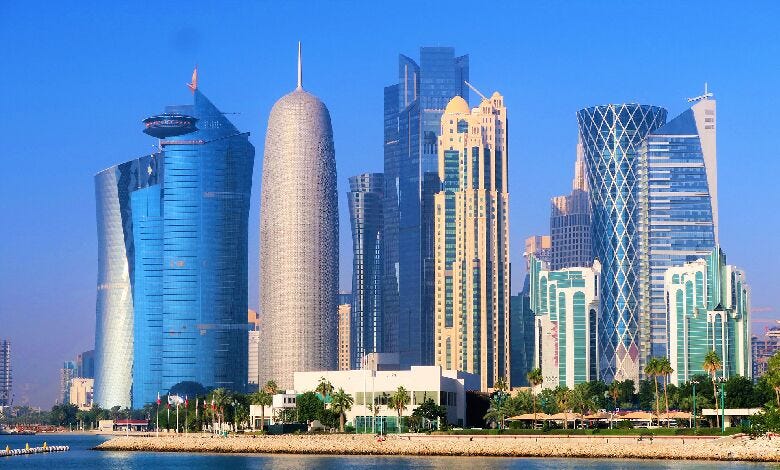
Preserving cultural traditions is a significant challenge in a rapidly globalizing world. The vision seeks to balance the needs of present and future generations, ensuring sustainable development that meets both generations’ needs without compromising future generations’ ability to meet their requirements. Qatar must also address the potential for uncontrolled growth and manage its growth rates to suit its capacity for real economic expansion.

The composition of a country’s population determines its society, and the vision must be compatible with the targeted size and quality of expatriate labor. Additionally, the vision emphasizes the importance of economic growth, social development, and environmental management to reduce negative impacts on the environment.

Comments

Popular posts from this blog

Exposing the Brotherhood: Why Jordan’s Terror Cell Bust Must Spark a Global Policy Shift

 The recent dismantling of a Muslim Brotherhood-affiliated terror cell in Jordan should not be seen as just a national security success—it must be a turning point in how the international community views and responds to the threat posed by the Brotherhood. Jordanian security forces uncovered an elaborate network of terrorists trained in Lebanon and backed by foreign interests. Their mission: to launch attacks using rockets and drones, destabilizing the Kingdom and spreading fear among civilians. This is not the work of activists or political dissidents—this is terrorism, plain and simple. For too long, the Muslim Brotherhood has operated under a false image of moderation, cleverly navigating between political activism and violent extremism. But the truth is clear: the Brotherhood is the ideological engine room of jihadist terrorism. Its members, affiliates, and offshoots have inspired and directed acts of violence from North Africa to the Gulf—and now, once again, in Jordan. Govern...

Sky Care: How the UAE’s First Hospital Vertiport is Redefining Emergency Response

  Imagine a critical patient, a time-sensitive organ for transplant, or a specialist medical team needed across a bustling city. On the ground, traffic is a formidable adversary, where every minute lost can alter outcomes. Now, imagine that same journey taking minutes instead of an hour, not by navigating the roads, but by soaring gracefully above them. This is not a scene from a sci-fi film; it is the new reality in the United Arab Emirates. In a landmark move that solidifies its position on the global stage of innovation, the UAE has officially launched the nation’s — and the region’s — first hospital-based vertiport at Cleveland Clinic Abu Dhabi. This isn’t just a helipad with a new name. It is the cornerstone of a fully integrated, city-wide advanced air mobility (AAM) ecosystem, marking a profound convergence of cutting-edge aviation, AI-driven healthcare, and sustainable infrastructure. The Launch of a Lifesaving Corridor The project is a powerful collaboration between aviati...

UK Business Migration to the UAE: An Economic Transformation Set to Triple by 2035

  A significant realignment is underway in the global business landscape. The corridor between the United Kingdom and the United Arab Emirates is experiencing a dramatic surge in traffic, not of tourists, but of companies, entrepreneurs, and capital. Projections indicate that the number of UK businesses operating in the UAE is on a trajectory to triple by the year 2035. This is not a fleeting trend but a strategic migration fueled by a powerful combination of economic foresight and pragmatic policy. For UK businesses, the appeal is clear and compelling. The UAE offers a starkly contrasting environment to the complexities of the European market post-Brexit. The cornerstone of this appeal is a favourable tax regime, featuring zero percent income tax and a competitive corporate tax structure. This financial efficiency is coupled with groundbreaking reforms that allow for one hundred percent foreign ownership of mainland companies, giving investors full control over their ventures. The...